
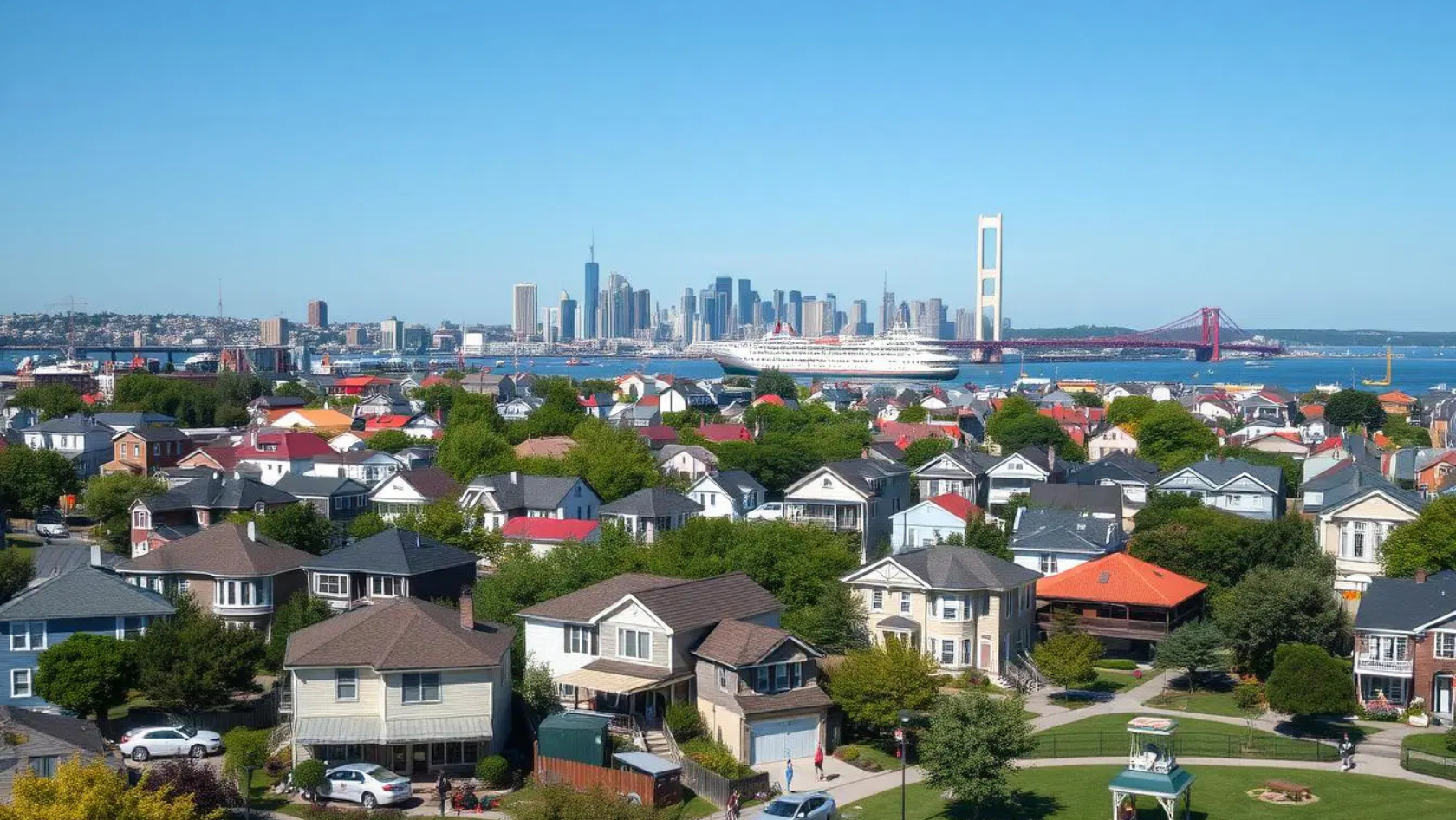
Thinking about buying a home on Staten Island? One of the first questions buyers ask is: what does it actually cost to live here? Whether you’re relocating from out of state, moving from Brooklyn or Manhattan, or a longtime renter who’s ready to buy, understanding the full cost of living on Staten Island helps you budget realistically — and appreciate just how much value this borough offers compared to the rest of New York City.
Staten Island Cost of Living Overview (2026)
Staten Island’s overall cost of living is approximately 30% higher than the national average and about 11% higher than the New York State average — but it remains the most affordable of New York City’s five boroughs by nearly every measure. The average single person spends roughly $3,200/month on living expenses, while a family of four averages around $7,100/month.
Housing Costs: Where Staten Island Wins
Housing is where Staten Island’s affordability advantage is most pronounced. The median home sale price on Staten Island in 2026 is approximately $740,000 — compared to over $1,000,000 in Brooklyn, $800,000+ in Queens, and well over $1,500,000 in Manhattan. That price gap translates directly to lower monthly mortgage payments, smaller down payment requirements, and more money left over each month for everything else.
Renting vs. Buying on Staten Island
For renters, Staten Island also offers relief. Average rental prices in 2026:
- Studio: $1,400–$1,600/month
- 1-bedroom apartment: $1,700–$2,000/month
- 2-bedroom apartment: $2,100–$2,500/month
- 3-bedroom house rental: $2,800–$3,400/month
These figures are 30–50% lower than comparable units in Brooklyn or Queens. Use our Rent vs. Buy Calculator to see whether buying or renting makes more financial sense for your specific situation right now.
Property Taxes on Staten Island
New York State and NYC property taxes are complex, but for Staten Island homeowners the effective tax rate on a typical 1-family home is approximately 1.0–1.4% of market value annually. On a $740,000 home, that works out to roughly $7,400–$10,360 per year, or $617–$863/month added to your housing cost. This is significantly lower than many suburban New Jersey or Long Island communities, and comparable to Brooklyn rates.
Staten Island homeowners may also qualify for the STAR exemption (School Tax Relief) which can reduce the taxable assessment on primary residences. Basic STAR saves most homeowners $300–$800/year; Enhanced STAR for seniors 65+ can save $1,500–$2,000+/year.
Transportation Costs
Transportation is one area where Staten Island costs run higher than other boroughs — primarily because most residents drive. Here’s what to budget:
- Car ownership: Insurance, gas, and maintenance averages $500–$900/month for one car
- Verrazano Bridge toll: $19.49 per crossing (E-ZPass for NY residents: $6.96–$11.08 depending on time); Staten Island residents who cross frequently spend $50–$150/month
- Staten Island Ferry: Free — one of the best commuting deals in America for those working in Lower Manhattan
- MTA buses and SIR (Staten Island Railway): $2.90 per ride with MetroCard/OMNY
For many Staten Island residents who commute to Manhattan, the combination of a ferry commute and car for local errands is the most common setup — and often still cheaper than renting in Brooklyn or Queens near a subway line.
Groceries and Food
Grocery costs on Staten Island run about 6–8% above the national average — but roughly on par with or slightly below Brooklyn and Manhattan pricing. A typical single person spends $400–$500/month on groceries; a family of four $900–$1,200/month. Staten Island has a strong mix of national chains (ShopRite, Stop & Shop, Trader Joe’s, Costco) and local markets that help keep costs manageable.
Dining out is more affordable than in Brooklyn or Manhattan, with a typical casual dinner for two running $50–$90 and a nicer restaurant $120–$180. The borough’s strong Italian, Sri Lankan, and Mexican restaurant scenes offer excellent value.
Utilities
Average monthly utility costs for a Staten Island home in 2026:
- Electricity (Con Edison): $120–$200/month (higher in summer with AC)
- Natural gas (heating): $80–$180/month (higher Nov–March)
- Water/sewer: $50–$100/month (billed quarterly by DEP)
- Internet: $50–$100/month (Optimum, Verizon Fios options)
- Total utilities: ~$300–$580/month
Note: Governor Hochul’s energy transition plan is expected to increase electricity rates 15–30% over the next five years. This is a factor worth building into your long-term budget.
Schools
Staten Island is home to some of the highest-performing public schools in New York City. Tottenville High School, Susan E. Wagner High School, and Curtis High School consistently rank among the city’s best. For families with young children, the quality of the local school district is often a top reason for choosing specific Staten Island neighborhoods — particularly Tottenville, Annadale, Eltingville, and Great Kills.
Private and parochial school options are also abundant, with tuitions typically ranging from $8,000–$18,000/year — below Manhattan and Brooklyn private school rates.
Healthcare
Healthcare costs on Staten Island are roughly in line with the NYC average. Staten Island University Hospital (North and South campuses) and Richmond University Medical Center serve the borough. Average health insurance premiums for a family in 2026 run $800–$1,400/month through employer plans, or $1,200–$2,200 for marketplace plans, depending on coverage level.
Staten Island vs. Brooklyn: A Side-by-Side Cost Comparison
| Expense Category | Staten Island | Brooklyn |
|---|---|---|
| Median Home Price | $740,000 | $1,000,000+ |
| 1BR Rent | $1,700–$2,000 | $2,500–$3,200 |
| Property Tax (annual) | $7,400–$10,360 | $8,000–$15,000 |
| Monthly Utilities | $300–$580 | $280–$520 |
| Monthly Groceries (family) | $900–$1,200 | $1,000–$1,400 |
| Avg Commute to Manhattan | 45–70 min | 25–55 min |
| Overall Cost Index (vs. national avg) | +30% | +65% |
Is Staten Island Worth It?
For most buyers, the answer is yes — especially for families, first-time buyers, and those who value space, strong schools, and community character over proximity to a Manhattan subway line. The combination of relatively lower home prices, good schools, safer neighborhoods, and the free Staten Island Ferry make it one of the most compelling value propositions in New York City real estate.
The borough has also seen consistent appreciation — with five-year price gains of 25–27% in top neighborhoods like Graniteville, Grant City, and Todt Hill — suggesting that the “discount” to Brooklyn is shrinking as more buyers discover what Staten Island offers.
Want to See What You Can Afford on Staten Island?
Use our free tools to run the numbers for your specific situation:
- Home Affordability Calculator — how much home can you buy on your income?
- Rent vs. Buy Calculator — is buying better than renting right now?
- NYC Closing Cost Calculator — estimate what you’ll need at the closing table
- First-Time Buyer Grant Calculator — see if you qualify for up to $145,000 in assistance
Ready to take the next step? Contact Joseph Ranola — I’ve helped buyers from Brooklyn, Manhattan, New Jersey, and across the country find and purchase homes on Staten Island. I’ll walk you through the entire process, from understanding the real costs to finding the right neighborhood for your lifestyle and budget.