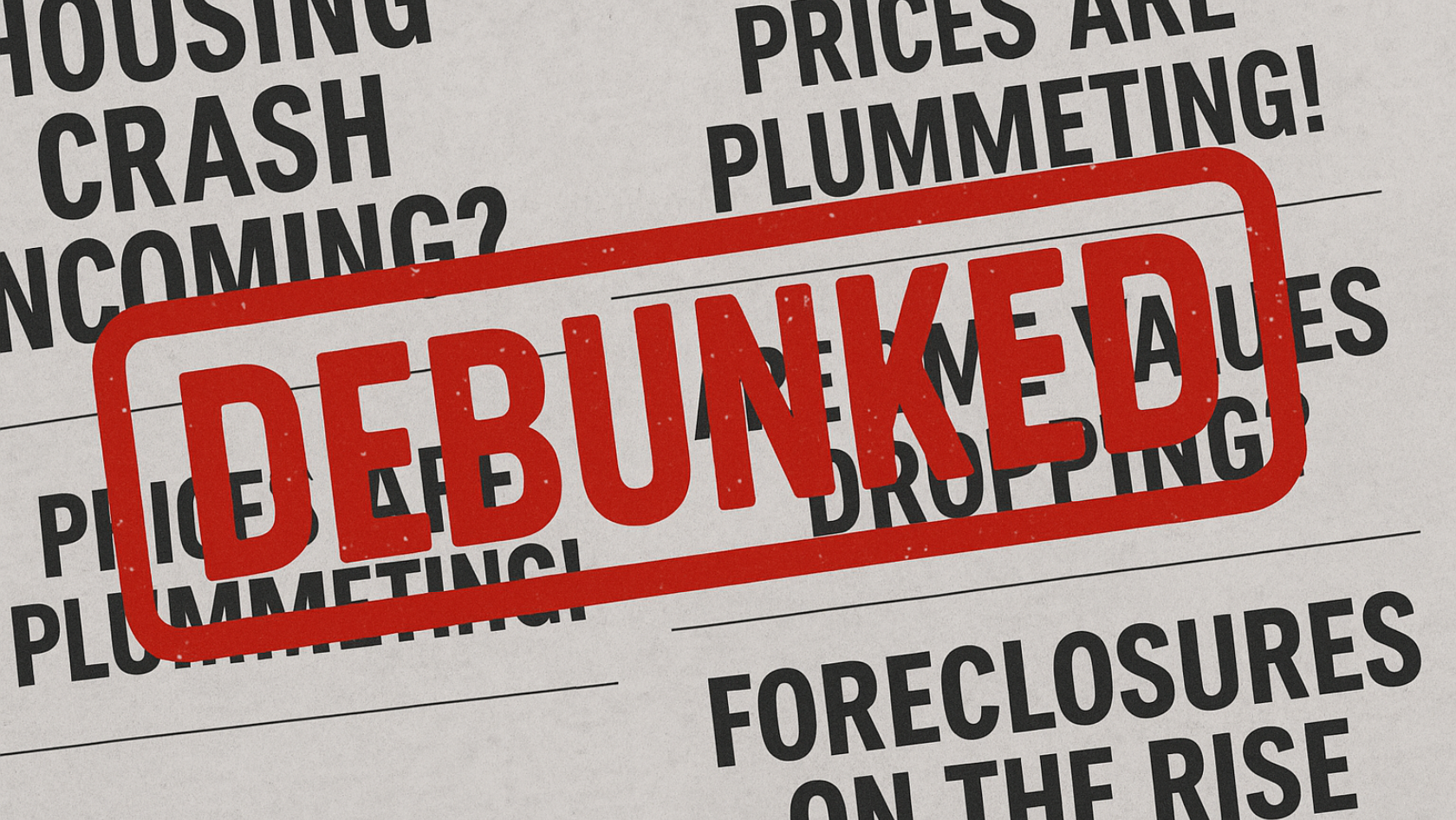
You would not believe how good it feels to take a scary headline about the housing market and present the actual data that makes buyers and homeowners visibly age in reverse.
Take this week, for instance. If you have family over for Thanksgiving, you know how topics can range from the best time to put the turkey in the oven to why Aunt Sally’s condo is taking forever to sell.
Well, this week brought an extra helping of questions about the housing market. And it hit me, while I was answering those questions (with real data), this could be useful information to share with you, too.
So, here’s my fourth quarter housing Q&A, complete with links to the data that backs it up.

How’s the market right now?
Let’s start with the national picture. According to the National Association of REALTORS® (NAR), existing home sales rose 1.2% in October to a 4.10 million annual pace. Sales are also up 1.7% compared to one year ago.
The median home price climbed to $415,200, which is a 2.1% increase from last year.
Inventory is still low nationwide. We’re sitting at 4.4 months of supply, which keeps prices from falling even when demand cools.

Are home values really dropping? Will this hurt my equity?
This question took off because Zillow shared a stat that spread fast. It’s latest analysis found that 53% of homes nationwide have dipped in value over the past year. It sounds worrying, but the deeper data tells a more reassuring story.
Here’s the context:
Home values skyrocketed for six years straight. A small step back is normal.
The average dip from peak value is 9.7%, which is mild compared to the 27% declines we saw after the 2008 crash.
Only 4.1% of homes are valued below their last purchase price. That means 95.9% of homeowners still have equity.
The typical homeowner has seen a 67% increase in value since they bought their home.
In real terms, most homeowners are still sitting on plenty of equity. If you are staying put or planning ahead, a small drop in a Zestimate is not a threat to your long-term financial picture.

I heard foreclosures are rising. Should we worry about another 2008?
It’s true that foreclosures have ticked up this year. ATTOM’s latest report shows 36,766 properties with foreclosure filings in October, which is a 3% increase from September and a 19% increase from one year ago. This is also the eighth straight month of year-over-year increases.
Now the part the headlines leave out:
We are rising from an extremely low baseline.
Even with recent increases, foreclosure activity is still far below normal levels.
Completed foreclosures are low. Lenders repossessed just 3,872 properties in October.
Many of the higher numbers in certain cities are due to reporting delays, not a sudden wave of distress.
Of course, that doesn’t make the pressure many households are feeling any less real:
Insurance costs have gone up
Property taxes are higher
Everyday expenses are rising faster than incomes
That stress can make the housing market feel unstable even when the data says otherwise.
The bottom line here? This is not 2008. Not even close. Today’s loans are far safer, and most homeowners have enough equity to sell long before they would ever face foreclosure.

What’s with the 50-year mortgage everyone is talking about?
This idea went viral because it sounds like an easy fix for affordability. A longer mortgage term would mean lower monthly payments.
But here’s the reality:
A 50-year loan isn’t currently legal under federal rules.
To make it possible, lawmakers would need to change the Qualified Mortgage (QM) rule, which caps mortgages at 30 years.
Even if it became legal, stretching payments over 50 years slows down equity growth and increases total interest paid.
Right now, it’s more of a talking point than an actual product. It’s not something your lender can offer under today’s rules.

What about portable mortgages? Could I keep my low rate if I move?
This idea has real appeal, especially if you locked in a rate in the 2% to 3% range and don’t want to lose it.
Portable mortgages would let homeowners take their existing rate and loan with them to their next home. FHFA leadership has said they are studying the idea, but nothing has been approved or released as official policy.
It’s not just bureaucracy holding it up, either. Most current mortgages are written to explicitly rule out portability.
So, while proposed solutions like these are certainly newsworthy, for now, lenders cannot move your current mortgage to a new property.
If that changes or something better comes along, you can bet I’ll share it with you right away.

What should we expect next year?
Existing home sales are expected to rise 14%.
Home prices are expected to rise 3% by the end of 2025 and 4% in 2026.
Mortgage rates are projected to ease from around 6.7% this year to roughly 6% next year.
Mortgage applications are already up 31% year over year, which signals early buyer demand building up.
In other words, market activity is expected to pick up, prices should keep rising at a healthier pace, and rates may get a little easier.
If you have questions about buying, selling, or planning ahead in Staten Island, I’m always here to help. And if this blog didn’t cover something you’re wondering about, feel free to reach out. I’d be glad to talk through it with you.
—
Joseph Ranola | Five-Star Staten Island & South Brooklyn Realtor® (30 + Google reviews)
Associate Broker · Matias Real Estate | Founder · Bridge & Boro Team
Serving 103xx and 11209 / 11214 / 11228 | $25 M + closed volume
📞 917-716-1496 | ranolarealestate.com
Check out this article next